
How to Choose the Right Glass for a Dubai Villa: Heat, Glare and Privacy
A practical guide for Dubai homeowners choosing villa windows and doors: cooler rooms, less glare, street privacy, and safety glass for children.
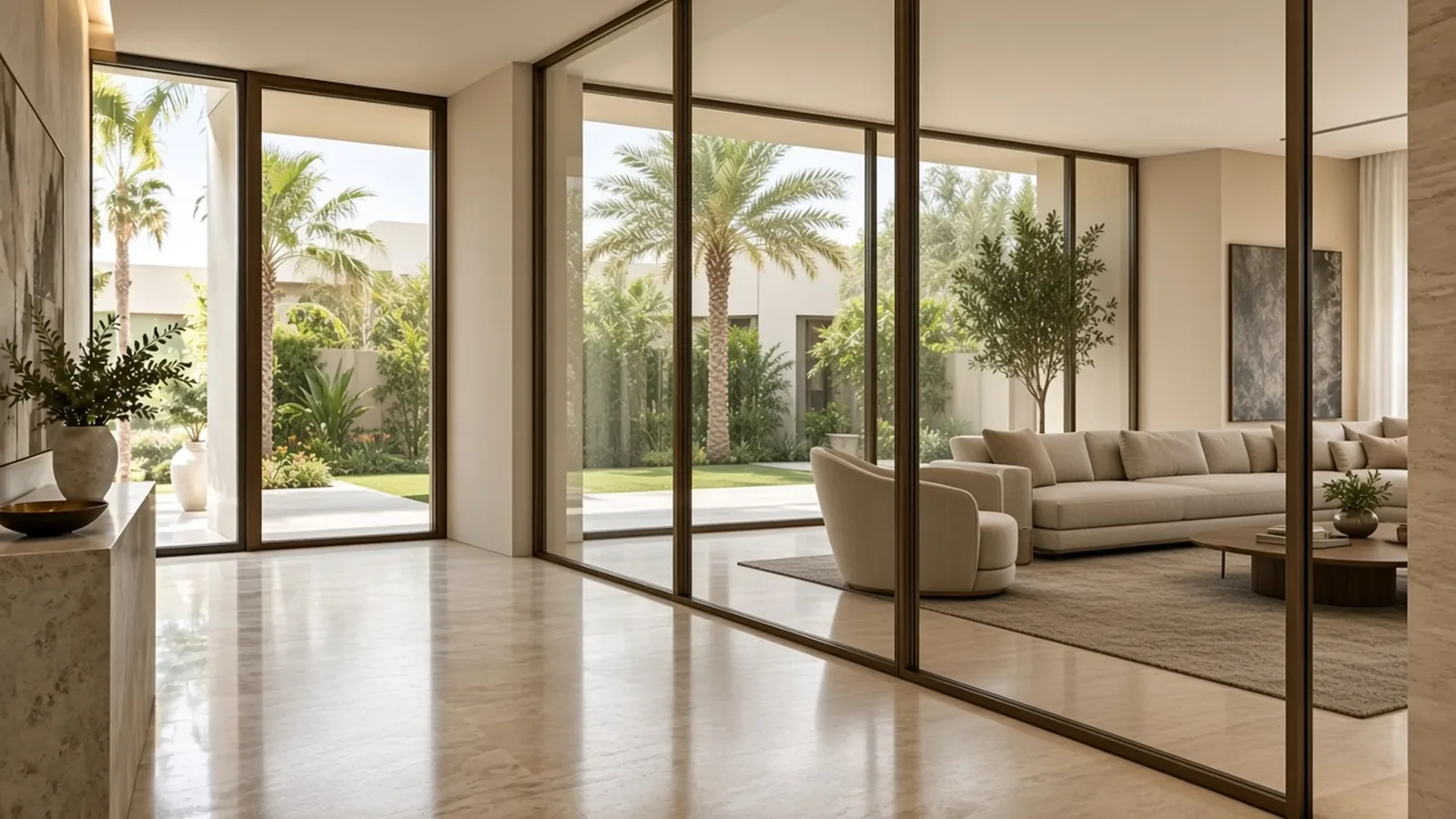
Start with the room, not a glass name
Choosing glass for a Dubai villa is easier when you describe the room before you pick a product name. A west-facing living room, a street-facing bedroom and a family room with young children can need three different specifications, even when the frames look the same.
Walk each opening at the time of day you actually use it. Note where the sun hits, where you sit, and who can see in from the garden, the neighbour’s upper floor or the street. Bring those notes, plus rough widths and heights, when you ask Glass World to look at the Dubai villa. A site visit can then turn a preference into a window or door that can actually be made.
How to keep rooms cooler in summer
Large glass brings in light, and it also brings in heat. The first decision is how much glass the room really needs, and whether an overhang, a side fin or a planted screen can shade the opening before the glass has to do all the work. Glass that sits in full afternoon sun will feel warmer than the same glass under a deep roof.
For openings that stay in the sun, ask about insulated glass, also called double glazing. Two panes with a sealed space between them slow heat moving into the room compared with a single pane of the same size. A coating on one of the panes can reflect part of the sun’s heat. Ask the supplier to name the exact build-up they are quoting, including the coating, so two prices can be compared on the same product.
Tint and reflective coatings also change how much heat and brightness come through. A darker or more reflective pane can ease the load on a sunny facade, and it also changes the colour of the view and the look of the villa from outside. Approve a sample in the real opening, or as close to it as you can, rather than from a small chip under indoor lights.
The frame matters as much as the pane. A well-made aluminium window or door should close evenly, with gaskets that meet all the way around. A high-performance pane will not help much if the sash is twisted or the seals are open. Include the frame, the glass and the shading in one conversation before anyone orders.
How to cut glare without making rooms dark
Glare is the brightness that makes a screen hard to read or a sofa uncomfortable, even when the room is not especially hot. In a Dubai villa it often comes from low sun on a west or east opening, from light bouncing off a pool, or from a pale courtyard wall.
Start with shade outside the glass: a roof overhang, a pergola, or an external screen. Shade stops the brightest light before it reaches the pane, so the room can stay brighter than it would with a very dark tint used on its own.
If the glass itself needs to do more, compare a light tint, a solar-control coating and a clearer pane side by side. A heavy tint can make a north-facing room feel dull for the rest of the day just to soften one hour of sun. Ask to see the sample at the difficult time of day, with the lights off, and check whether you can still see the garden and read comfortably.
Inside, blinds and curtains are a useful second layer because you can open them when the sun has moved. They are not a substitute for choosing the right glass on a window that is unbearable every afternoon. Decide which job belongs to the glass and which job belongs to the blind before the frames are ordered.
Privacy from neighbours and the street
Privacy is about specific views, not a single glass type. A ground-floor window facing a boundary wall needs less screening than a bedroom that looks straight at a neighbour’s terrace, or a living room that faces the street.
Clear glass keeps the view and the daylight, and it also lets people see in when the room is brighter than the outside, especially at night. If you want the garden view by day and screening when you need it, plan blinds or curtains with the window. If you want the glass itself to obscure the view all the time, look at frosted glass or a textured pattern and judge a large sample from the path someone will actually walk.
Check the sample both ways: from outside looking in, and from inside looking out. A finish that hides the street may also hide your own garden. You can mix clear glass above eye level with a more private finish below, or use private glass only on the openings that face the neighbour. Mark those panes on a simple elevation so the factory and the installer treat them as different items.
Be careful with glass sold as one-way or mirror glass. How it behaves depends on which side is brighter. At night, with indoor lights on and the garden dark, a reflective pane can still let people outside see in. If night-time privacy matters, include blinds or an obscure finish in the plan rather than relying on a reflective coating alone.
Safety glass for families with children
Ordinary glass can break into sharp pieces. In a family villa, pay attention to doors, low windows, glass beside a stair, and any pane a child can run into or fall against. Ask which panes will be toughened glass and which will be laminated glass, and why.
Toughened glass is heat-treated so it is stronger in normal use and, if it breaks, it breaks into small pieces rather than long shards. Laminated glass is two or more panes held together by a layer in between, so it tends to stay in the frame when it cracks. That difference matters beside a pool, on a stair, or on a full-height door where you do not want an opening to appear the moment the glass fails.
Safety glass is not a finish you can add later by sticking on a film and calling the job done. The type has to be chosen before the pane is made, because toughened glass cannot be cut down on site. Tell the surveyor where children play, which doors they use, and which windows sit low. Those notes belong on the drawing, next to the heat and privacy notes, so one opening is not specified only for looks.
What to agree before the glass is made
A useful quotation lists the same things for every opening. Ask for the glass type, the tint or coating, whether it is single or insulated, the safety treatment, and the frame finish. Two prices that both say “villa windows” can be describing different products.
Measure after the floors and walls that affect the opening are in place, and check the route into the house. A tall pane that looks right on a drawing still has to come through the gate, the corridor and the room. Mark any pane that must be frosted, laminated or made to a special size so it is not swapped for a standard clear pane during ordering.
- Which rooms face the sun, the street or a neighbour.
- Where you need shade, a lighter tint, or a blind as well as the glass.
- Which panes should be toughened or laminated because children use that room.
- Frame colour, handle side, and how each door or window opens.
- A labelled sample approved in daylight, kept until the glass arrives.
Ask Glass World for a villa glass quote
Send photographs of the openings, the rough sizes, and a note of what you want each room to do: stay cooler, reduce glare, give privacy, or be safer for children. Glass World can survey the villa and quote the windows and doors against that brief.
Call +971 58 577 8653, email rfq@glassworld.ae, or use the contact page to request a quote.
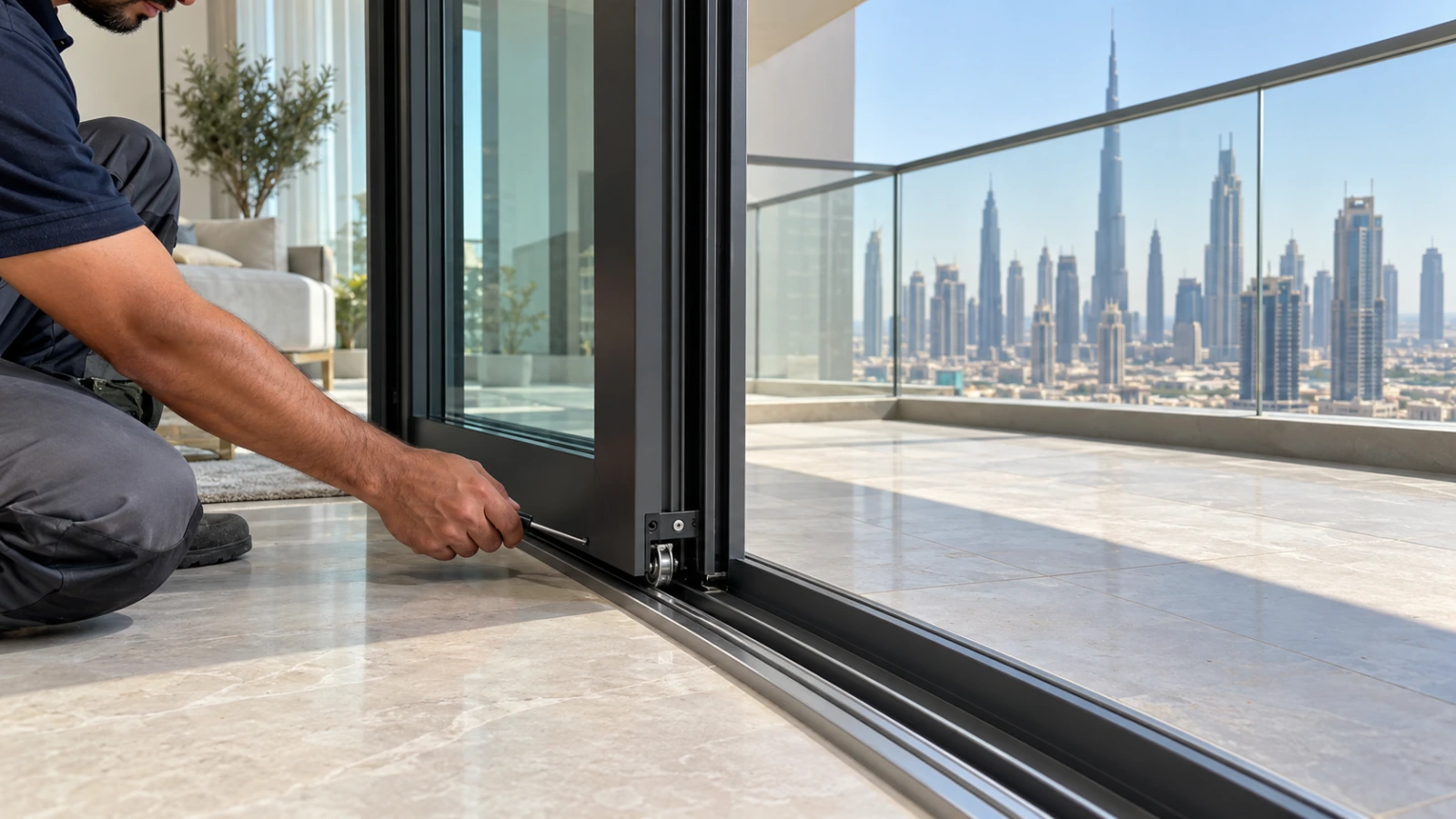
Aluminium Sliding Door Roller Replacement in Dubai: Signs, Process and Cost Factors
Learn when aluminium sliding door rollers need replacement in Dubai, what a site visit should check, and how to plan a lasting repair for homes and commercial spaces.
Read article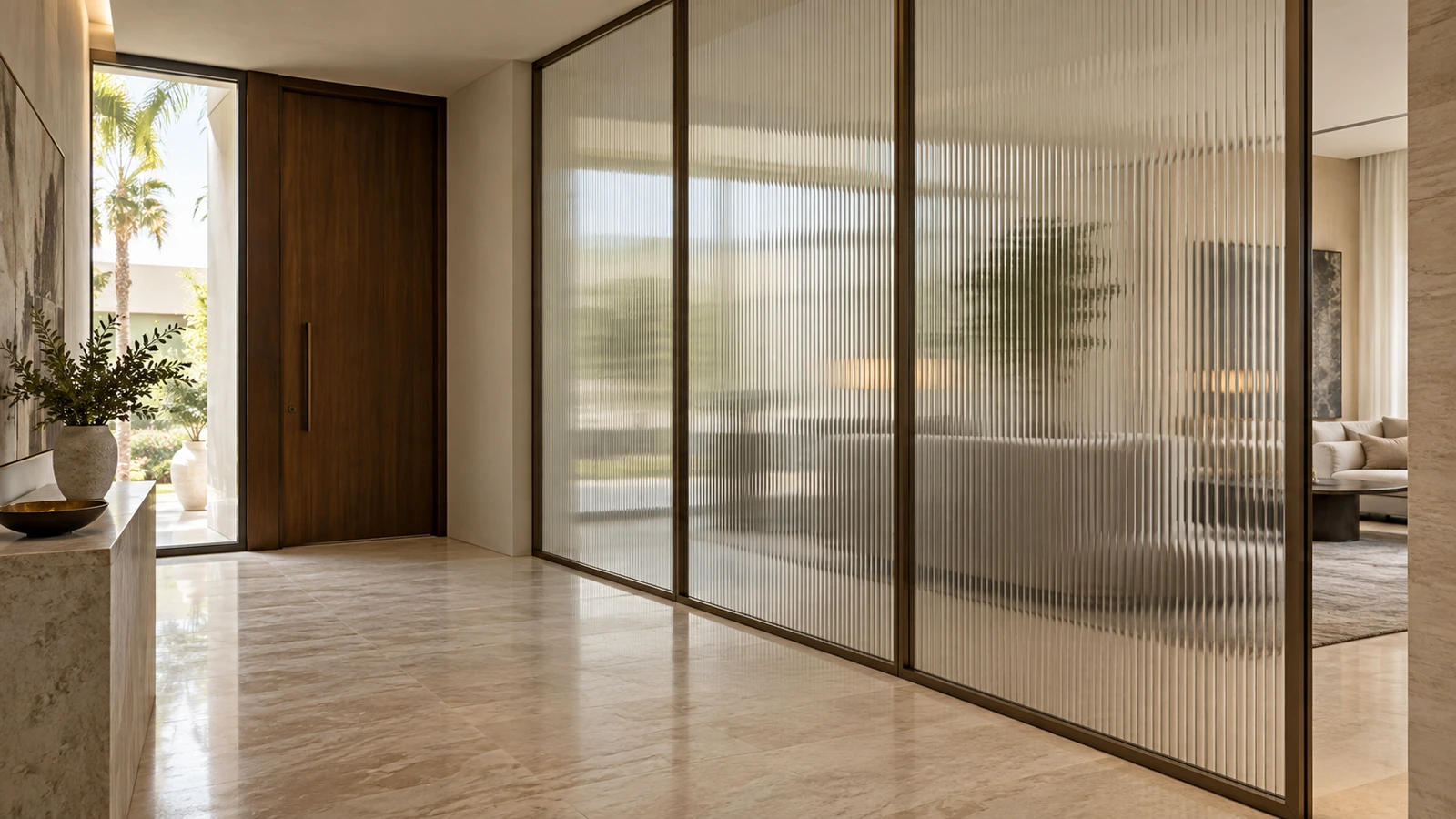
Fluted Glass Partitions in Dubai: Privacy and Cost Guide
Planning fluted glass partitions in Dubai? Compare privacy, rib patterns, safety glass, frames and installation costs before ordering a custom screen.
Read article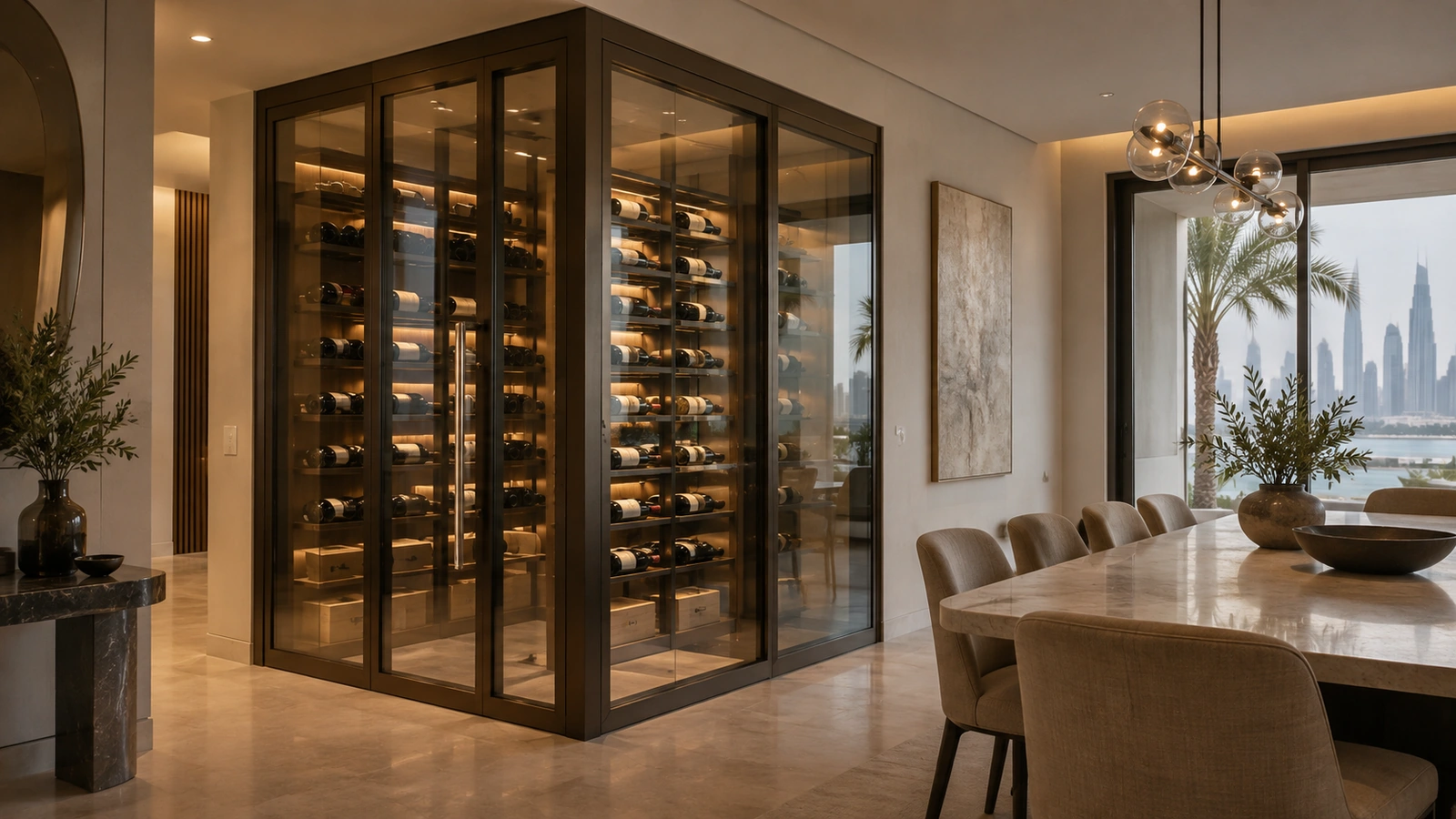
Glass Wine Rooms in Dubai: Insulated Glazing and Cost Guide
Planning a glass wine room in Dubai? Understand insulated glazing, sealed doors, condensation, cooling coordination and quote costs before installation.
Read article